
The Great Concrete Bake-Off: How Summer Heat Affects Your Slab
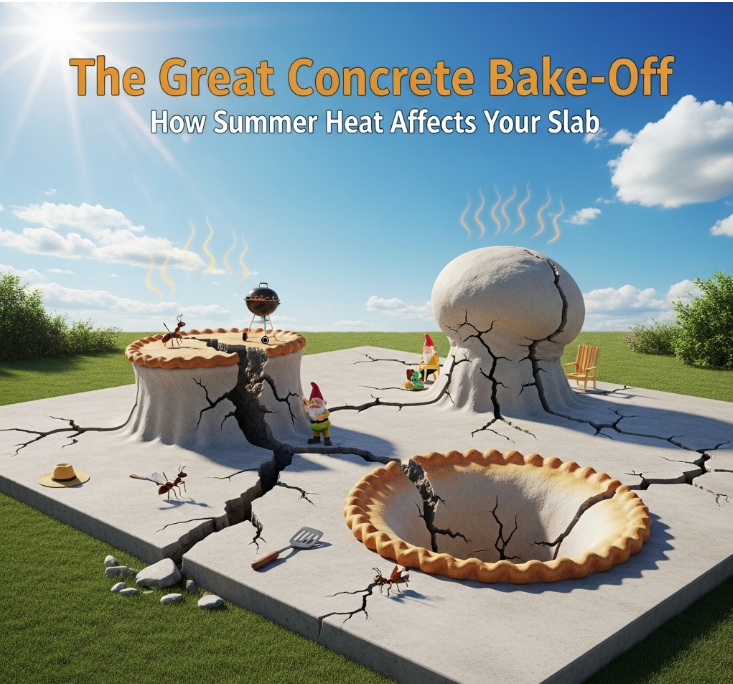 Imagine, if you will, a magnificent, flat, grey sheet of dough. It’s been carefully placed in your yard, perfectly smooth and ready for its grand purpose. This, my friends, is your concrete slab – your driveway, patio, or sidewalk – and as summer really starts to crank up its oven here in Collinsville, IL, your slab is about to enter its very own "Great Concrete Bake-Off." And just like a poorly managed baking project, extreme heat can lead to some unexpected and undesirable results, including cracks, expansion, and even sinking.
The Rising Dough Dilemma: Expansion
When you bake bread, the yeast gets active, the dough warms, and it begins to puff up and expand. Your concrete slab does something remarkably similar under the relentless summer sun. Concrete is a rigid material, but it's not entirely static. As temperatures soar, the particles within the concrete absorb that heat and vibrate more rapidly, causing the material to expand. Think of it as your concrete dough subtly rising. If there isn't enough room for this expansion – perhaps it's poured right up against your house's foundation or another slab without proper expansion joints – this rising dough has nowhere to go. The pressure builds, and something has to give.
The Cracks in the Crust: Cracking
This expansion, if unrestrained or if the concrete simply isn't strong enough to handle the internal stress, often leads to cracking. It’s like when your pie crust gets too hot too fast and splits, or when a perfectly risen loaf of bread develops those characteristic fissures in its top. These are stress cracks, formed because the material has reached its limit. While some hairline cracks can be normal, particularly as new concrete cures, significant or spreading cracks during hot weather often indicate underlying issues with expansion, poor installation, or insufficient strength to withstand the summer bake. Water then seeps into these cracks, setting the stage for bigger problems when the freeze-thaw cycles of winter arrive.
The Sunken Soufflé: Sinking
And then there's the truly disheartening sight: a section of your concrete slab that looks like a soufflé that dramatically collapsed after being pulled from the oven too soon. This sinking, or settlement, isn't always directly caused by the heat itself, but summer conditions can certainly exacerbate it. Intense summer heat can dry out the soil beneath your slab, causing it to shrink and compact. If the soil was not properly compacted during installation, or if there are already existing voids, this drying and shrinking creates empty spaces. Without the support of the underlying soil, the heavy concrete slab, having lost its foundation, simply settles or sinks into these newly formed voids. It’s a bit like baking on an uneven surface – one side might look fine, while the other slowly collapses.
The Great Concrete Bake-Off is an annual event here in the Midwest, and while we can't control the summer sun's oven, we can control how our concrete handles the heat. Understanding how expansion, cracking, and sinking can occur during this intense season is key to protecting your investment. If your concrete is showing signs of struggling in the summer heat, perhaps with new cracks, increased expansion issues, or noticeable sinking, it's a call to action. Just like a professional baker can spot a flawed recipe, the experts at Woods Basement Systems can diagnose what’s really happening with your slab and recommend the right solutions to keep your concrete perfectly baked and standing strong, year after year.