
The Silent Threat: How Foundation Problems Impact Your Home's Value and Your Family's Health
 The Hidden Financial Cost: A Blow to Your Home's Value
A compromised foundation is one of the most significant red flags for potential homebuyers and can severely impact your property's value.3 The moment an inspector identifies a foundation issue, it signals thousands of dollars in potential repair costs.
-
Devaluation: According to a report by the National Association of Realtors, a home with a known foundation problem can lose between 10% and 15% of its market value.4 In a competitive housing market, this can be the difference between a quick sale and a property that sits for months, leading to a much lower final sale price.
-
Costly Repairs: The average cost of foundation repair can range from a few thousand dollars for minor cracks to over $20,000 for more extensive structural damage. These costs are a major deterrent for buyers, who would rather invest in a home that's move-in ready.
-
Insurance Nightmares: Many homeowner's insurance policies do not cover foundation problems caused by natural settlement or soil movement, leaving the homeowner to foot the entire bill for repairs. This makes it a high-risk liability that buyers and lenders are wary of.
The Health Hazard: More Than Just a Cracked Wall
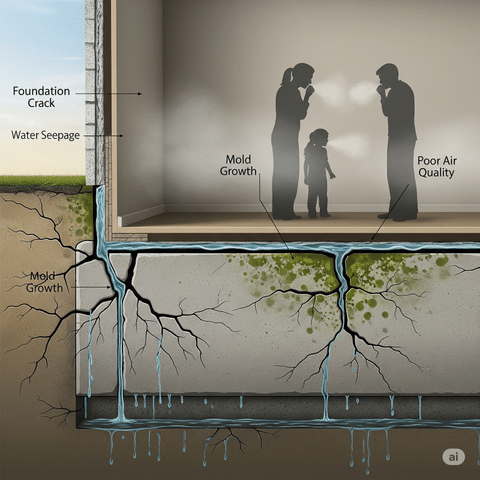
Beyond the financial hit, a failing foundation can create an environment ripe for health problems.5 The very cracks that compromise your home's structure also become entry points for water, pests, and harmful contaminants.6
-
Mold and Mildew: When water seeps through foundation cracks, it creates the ideal breeding ground for mold and mildew.7 These fungi release spores into the air which, when inhaled, can cause a range of health issues.8 For many people, mold exposure can trigger allergic reactions, asthma attacks, headaches, and other respiratory problems.9 The Centers for Disease Control and Prevention (CDC) has linked indoor mold exposure to upper respiratory tract symptoms, coughs, and wheezing in otherwise healthy people.
-
Pest Infestation: Foundation cracks and gaps provide an open invitation to pests like rodents, termites, and insects.10 These pests can carry diseases, contaminate food, and cause further damage to your home's wiring and wood structures. A strong foundation acts as a barrier, and its failure can lead to an unwelcome infestation.
-
Poor Air Quality: A damp basement or crawl space directly affects the air quality throughout your entire home.11 The air in the basement, often saturated with mold spores and moisture, rises through the rest of the house in a process known as the "stack effect." This means that the air you breathe on the first and second floors is directly influenced by the conditions in your basement.
The Final Verdict
Don’t wait for a flood or a visible structural collapse to address foundation issues. The signs—stair-step cracks in brickwork, sticky windows or doors, or a persistent musty smell in the basement—are early warnings of a problem that will only get worse.12 Proactively addressing these issues is the best way to protect both your most valuable asset and, more importantly, your family's health.13