
How to Inspect Your Basement for Early Foundation Problems
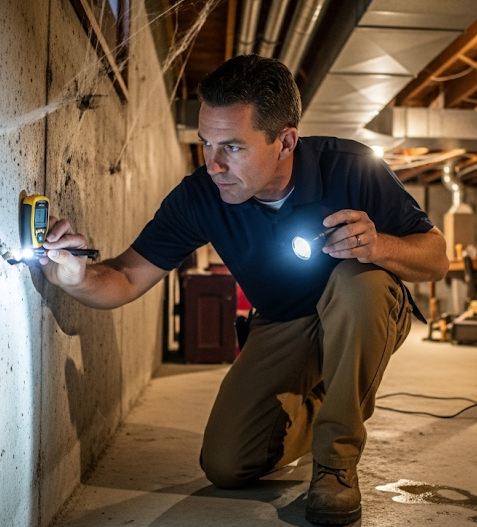
The first step to protecting your home from costly foundation damage is to know the warning signs. Your basement is the best place to start, as it provides a direct view of your home's foundation. While a professional inspection is the only way to get a definitive diagnosis, performing your own visual check-up can help you spot early issues and know when it’s time to call an expert like Woods Basement Systems.
Here’s a practical guide on how to inspect your basement for potential foundation problems.
Step 1: Look for Cracks in the Walls and Floor
This is the most crucial part of your inspection.
-
Foundation Walls: Examine the concrete or block walls for any cracks.
-
Stair-step cracks in brick or block are a common sign of foundation settling.
-
Horizontal cracks often indicate significant pressure from the soil outside.
-
Vertical or diagonal cracks can also be a sign of movement.
-
-
Basement Floor: Look for cracks in the concrete slab. Small, hairline cracks are often a result of concrete shrinkage and are usually not a concern, but larger cracks or uneven areas can signal a shifting foundation.
Step 2: Check for Water and Moisture
Water is a major culprit in foundation damage.
-
Moisture and Leaks: Look for any signs of water intrusion. This includes wet spots, water stains on the walls or floor, and efflorescence (a white, powdery mineral deposit).
-
Musty Odors: A persistent, musty smell can be a sign of high humidity or hidden moisture, which can lead to mold and damage.
-
Sump Pump: If you have a sump pump, check that it is functioning properly and that the discharge line is clear and directing water away from your home.
Step 3: Examine Doors and Windows
As the foundation shifts, it can affect the entire structure of your home, including door and window frames.
-
Sticking: Check if basement windows and doors are difficult to open, close, or latch.
-
Gaps: Look for gaps between the window or door frames and the surrounding walls.
Step 4: Go Outside and Look for Clues
Your inspection shouldn't be limited to the inside. The exterior can provide valuable information.
-
Grading: The ground around your house should slope away from the foundation to prevent water from pooling.
-
Gutters and Downspouts: Ensure your gutters are clean and your downspouts extend several feet away from the foundation to divert rainwater properly.
-
Exterior Cracks: Walk the perimeter of your house and check the exterior foundation for any cracks, especially where they correspond with cracks you found inside the basement.
If you find any of these signs, it’s a strong indication that you should contact a professional. A company like Woods Basement Systems offers free inspections to provide a thorough, expert assessment and a plan for any necessary repairs.
To sign up for a free in home inspection, CLICK HERE.