
How Soil Shifting in Illinois & Missouri Affects Your Home's Foundation
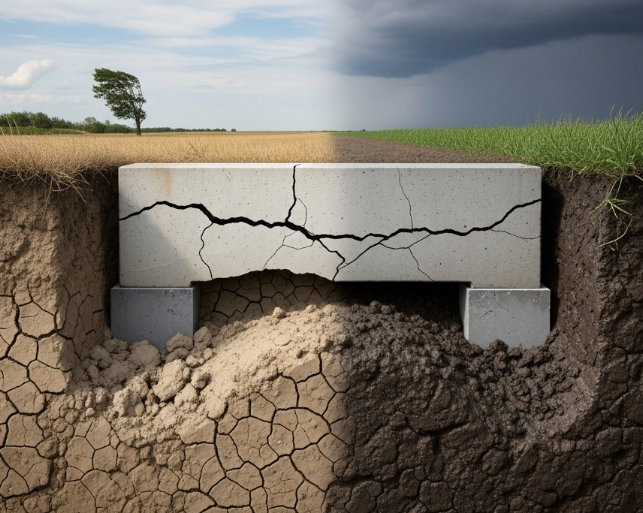 The Seasonal Impact on Your Foundation
The two most damaging soil events are related to extreme weather, both of which are common in the Midwest:
-
Drought and Contraction: During hot, dry periods, expansive clay soil loses moisture and shrinks. This process creates voids and gaps beneath and around your home's foundation. Without the soil's support, the foundation can begin to settle unevenly, leading to cracks in the concrete, walls, and floors. This phenomenon is often called a "floating foundation" as it loses its solid base.
-
Heavy Rain and Expansion: Following a period of drought, heavy rainfall can cause the dry soil to rapidly absorb moisture and swell. This expansion exerts enormous hydrostatic pressure against the foundation walls. This can cause the walls to bow inward, crack horizontally, or in severe cases, even collapse.
These cycles of shrinking and swelling create a continuous push-and-pull on your foundation, weakening its structural integrity over time.
Common Signs of Foundation Problems
The effects of soil shifting can be seen throughout your entire home. If you notice any of these signs, it's a good indication that your foundation may be compromised:
-
Cracks: This is the most common sign. Look for cracks in your foundation walls, basement floors, drywall, and ceilings.
-
Sticking Doors and Windows: As the foundation shifts, it can misalign door and window frames, making them difficult to open or close.
-
Uneven or Sloping Floors: If your floors feel slanted or have noticeable dips, it may be a sign of uneven foundation settling.
-
Bowing Walls: A basement wall that is starting to bulge or lean inward is a serious sign of hydrostatic pressure.
-
A Leaning Chimney: A leaning chimney that is separating from the rest of the house is a key indicator of foundation movement.
If you see these signs, it's important to consult with a professional. Ignoring them will only allow the damage to worsen, potentially leading to much more costly repairs in the future.