
Cracks in Basement Walls? Here's What They Really Mean
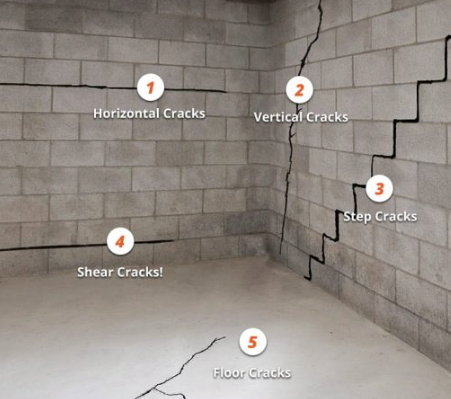 Vertical Cracks
Vertical cracks run straight up and down, or within about 30 degrees of vertical.
-
What they mean: Vertical cracks are often the result of minor foundation settlement or the natural drying and curing process of concrete. They are very common in new homes as the house settles into the soil.
-
What to do: Generally, vertical cracks are considered a cosmetic issue and are less of a structural concern. However, they can still be an entry point for water. It's wise to monitor them for any changes, and if they start to leak or grow wider, you should have them inspected.
Horizontal Cracks
Horizontal cracks run parallel to the floor, often in the middle of a basement wall.
-
What they mean: These cracks are a serious warning sign. They are almost always caused by extreme hydrostatic pressure from the soil outside pushing inward on the foundation. This pressure can cause the wall to bow or buckle.
-
What to do: Horizontal cracks should be treated as a structural emergency. If you find one, especially if the wall is also bowing, you should call a foundation professional immediately to prevent a potential wall collapse.
Diagonal & Stair-Step Cracks
Diagonal cracks run at an angle, while stair-step cracks follow the mortar joints in a block or brick foundation.
-
What they mean: Both types of cracks are signs of differential settlement, where one part of the foundation is sinking faster than another. The cracks often start at a corner of the wall and get wider at one end.
-
What to do: These cracks are typically a symptom of a serious, ongoing foundation problem. You should have them evaluated by a professional to determine the underlying cause and the necessary repair, which often involves stabilizing the foundation.
When to Worry
It's important to remember that all cracks are worth monitoring. While vertical cracks are often benign, horizontal, diagonal, and stair-step cracks are almost always a reason for concern. Additionally, you should be especially worried if:
-
A crack is wider than a quarter-inch.
-
A crack is growing over time.
-
The crack is accompanied by other issues like sticking doors and windows, uneven floors, or water intrusion.